Understanding user actions on your site can be the difference between success and failure. By analyzing users' behaviors, you will have a better idea of what they are interested in why they are leaving. It also allows communicating more personalized offers relevant to each customer specifically.
One of the most popular ways of tracking is Google Tag Manager. It allows you to quickly and easily update measurement scripts and related code fragments (collectively known as tags) on your website or mobile app.
In 2020, Google introduced a server-side container for Google Tag Manager. It can work together with the web GTM container and use web GTM as a data source; or independently and use webhooks, CRM data, or any other requests as a data source. So, is it necessary to switch to the server-side method of tracking?
In this article, I will talk about how server-side tracking differs from client-side, highlight the advantages and disadvantages of each system, and explain why Stape hosting is the best solution if you want to set up server GTM.
Client-side tracking is a common type of tracking where the user's browser interacts directly with analytics services. When a site page loads, the container is loaded simultaneously, tracking codes are triggered, and all interaction data is sent to analytics services. Such services can be Google Analytics as well as Google Ads and others.
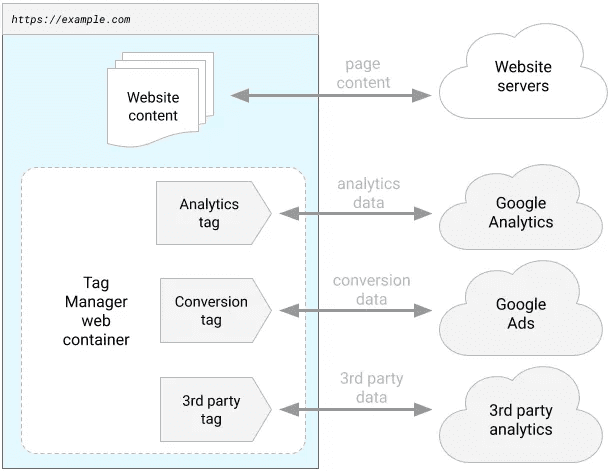
In the last few years, client-side tracking has been failing. Namely, the speed of the page decreased sharply, problems with security and with third-party cookies appeared. All because of heavy scripts (which overload the site), unwanted data leakage, low control, and increase of ad-blockers.
This is when server-side tracking comes along to deal with these issues. It is becoming more popular, transparent, and accessible.
Server-side tracking is a different new type of tracking that involves a server instead of a client. You create, install and manage it yourself.
The working principle is the same as in client-side tracking, but with one additional step - it is a cloud server container. It is on that server that the tag manager gets the data from the browser and then redirects it to the analytics systems.
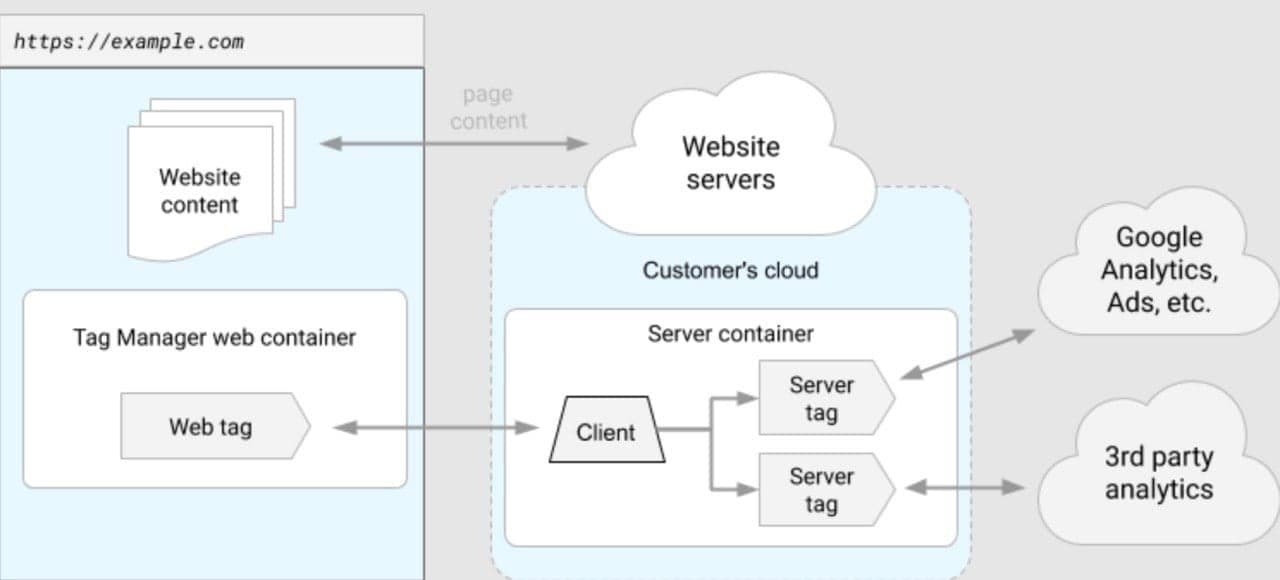
Instead of sending event data directly to analytics services, the data is sent first to sGTM and only then to the analytics services you use. User requests go to the server, then the Client transforms them into event data handled by tags, triggers, and other variables.




Comments