
Ivanna Holubovska
AuthorA lot of you have heard about Facebook Conversion API and Facebook Pixel. Though they sound similar in name, these two tracking methods work differently. Both tools provide crucial insights into how users interact with websites, but they collect data differently — making it important for businesses to distinguish which one is right for their needs.
In this blog post we’ll describe features of Facebook Conversion API and Facebook Pixel, compare them and discuss their setup.
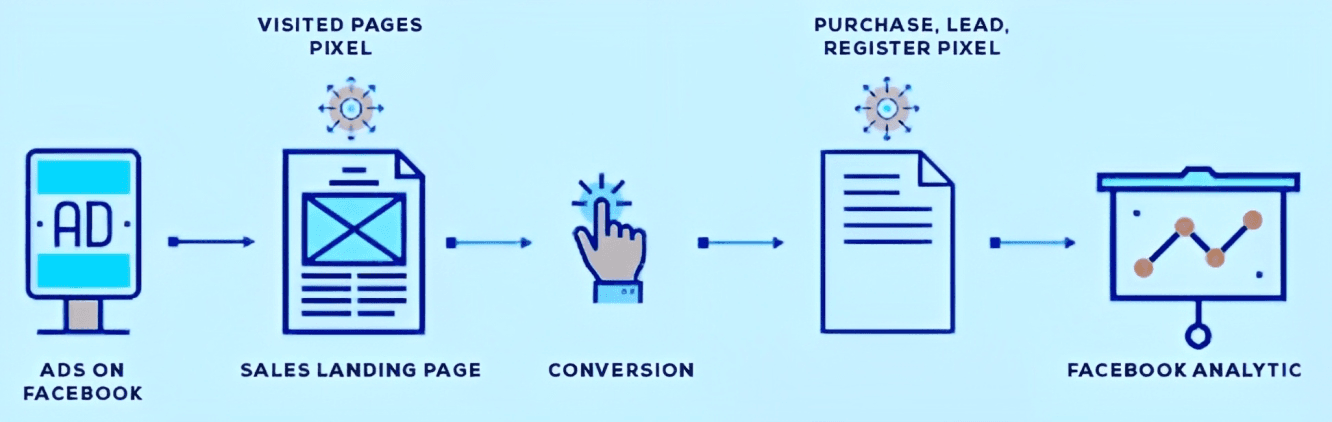
Facebook pixel is a data-gathering tool that can help you make the most of your Facebook and Instagram advertisements. Basically, Facebook Pixel, or now Meta Pixel, is a script that you put in your website code.
It collects data that allows you to analyze Facebook ad conversions, optimize advertisements, generate targeted audiences for future ads, and remarket to people who have already made some form of action on the website.
It helps companies to evaluate the effectiveness of their product or service advertising. Pixel tracks what users do when they come to your website after clicking an ad, as well as the pages they visit.
Facebook Pixel places the cookies and triggers them to track users. Everything is happening in the visitor’s browser. And that’s why this method is called client-side tracking.
It's also an example of third-party tracking, as data is provided to a third party (Facebook) that your visitor may be unaware of. Browsers are attempting to block third-party tracking.
Facebook Conversion API (CAPI) is a server-side method for tracking FB events. It gives greater data quality and control over the information you track compared to a Facebook pixel.
Facebook unveiled its Conversion API as a response to tracking restrictions that became more popular during the last couple of years. They state that CAPI s a powerful solution for advertisers looking to accurately measure the response and success of their FB ad campaign and helps counter new tracking restrictions like Intelligent Tracking Prevention in Safari or Firefox that limit cookie lifetimes, iOS tracking regulations, and growing ad-blocking rates.
Recent studies show advertisers can lose up to 30% of conversion data because of ad blockers and tracking restrictions. If these tracking restrictions are enabled, Facebook pixels do not work. This means that FB does not receive valuable information about user actions on the site, which can negatively affect campaign success measurement and the quality of custom and lookalike audiences.
With Facebook conversion API, you can bypass all these tracking restrictions and track user behavior even when tracking restrictions are enabled, and FB pixel is blocked. How is it possible?




Comments