
Ivanna Holubovska
AuthorConversion tracking is an incredibly powerful tool that provides insights concerning customer behavior, website performance, and the overall effectiveness of marketing campaigns - all highly valuable information when making informed decisions.
If you own a website, there are a lot of ways to keep track of what's going on: you can use different analytical platforms that gather all data that is needed for you to understand if you're doing a good job with the site.
But what if you would like to concentrate on your physical shop? What if you are tired of third-party cookies and different tracking restrictions and want to increase your offline sales?
In this blog post, we will explain offline conversion tracking and how with the server GTM you can track your clients' actions in the most accurate way.
Offline conversion tracking allows the recording of customer conversions made by phone, in-store orders, offline deals etc. That means via all of the interactions made in the real world: your customer saw an ad and went into your store to make a purchase, for example.
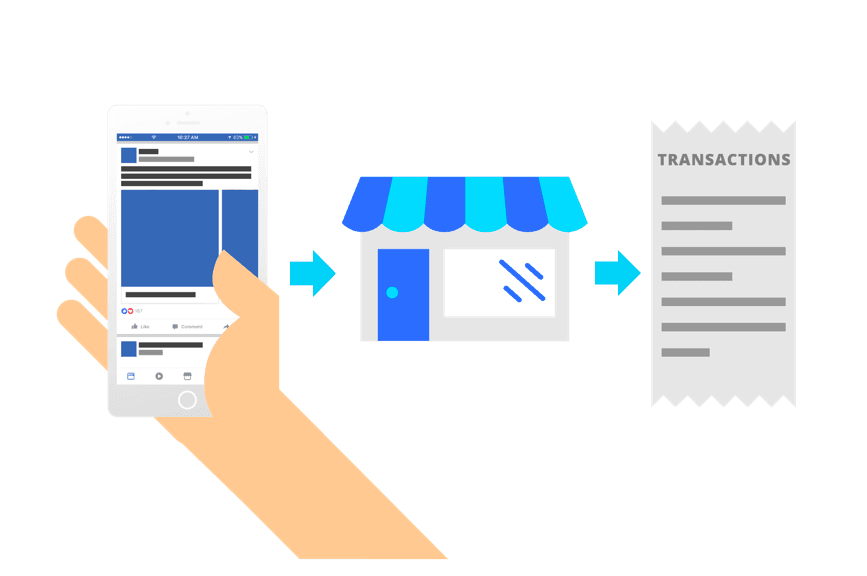
Everything that occurred outside of your website is considered an offline conversion.
Offline conversion is often considered to be better than online conversion for a variety of reasons.
For one, it provides more accurate data about customers and their purchasing habits. This can include what they buy, where they purchase it, how long it takes them to make a decision and how much they spend. Information can then be used to inform marketing strategies or adjust pricing accordingly.
Additionally, offline conversions are also better at measuring ROI. Offline conversions provide real-time insights which help to understand exactly how much your ads lead to sales in stores or through phone orders. This helps to understand how effective campaigns are and if you need to tweak anything to increase ROI further.
Offline conversions are great for gathering qualitative data as well as quantitative data. For example, businesses can use surveys or interviews with store personnel who interacted with customers to learn more about shopper experience, interests and feedback on products or services. This helps businesses improve their services for a better customer experience.
Setting up offline conversion tracking can be a difficult process. With third-party cookies being blocked and other tracking restrictions, it can be hard to accurately track conversions from different sources.
One of the biggest challenges associated with setting up offline conversion tracking is getting access to the right data. This can be complicated because many organizations lack the resources and infrastructure needed to track online and offline data sources in one place. Additionally, there may be additional privacy concerns that must be taken into consideration when collecting customer data. As such, many businesses choose to work with a third-party vendor that specializes in providing tools for accurate measurement of offline conversions.
Another challenge when setting up offline conversion tracking is being able to accurately attribute a user's journey between multiple devices and channels. It requires a business to have an understanding of the customer's full path-to-purchase journey, which involves capturing information from both digital and physical touchpoints. Without this data, it may be difficult for businesses to determine which channels are performing well and which ones need further optimization efforts.
And last challenge is the technical implementation of offline conversion tracking. The most popular and easiest way to track offline conversions is manually uploading them using a CSV file. Although manual upload is the most widespread and least technically challenging approach, it requires an inordinate amount of time. A daunting task lies ahead: collecting data relevant to conversations, organizing them according to network requirements, then importing – all without any real-time updating available during this laborious process.




Comments